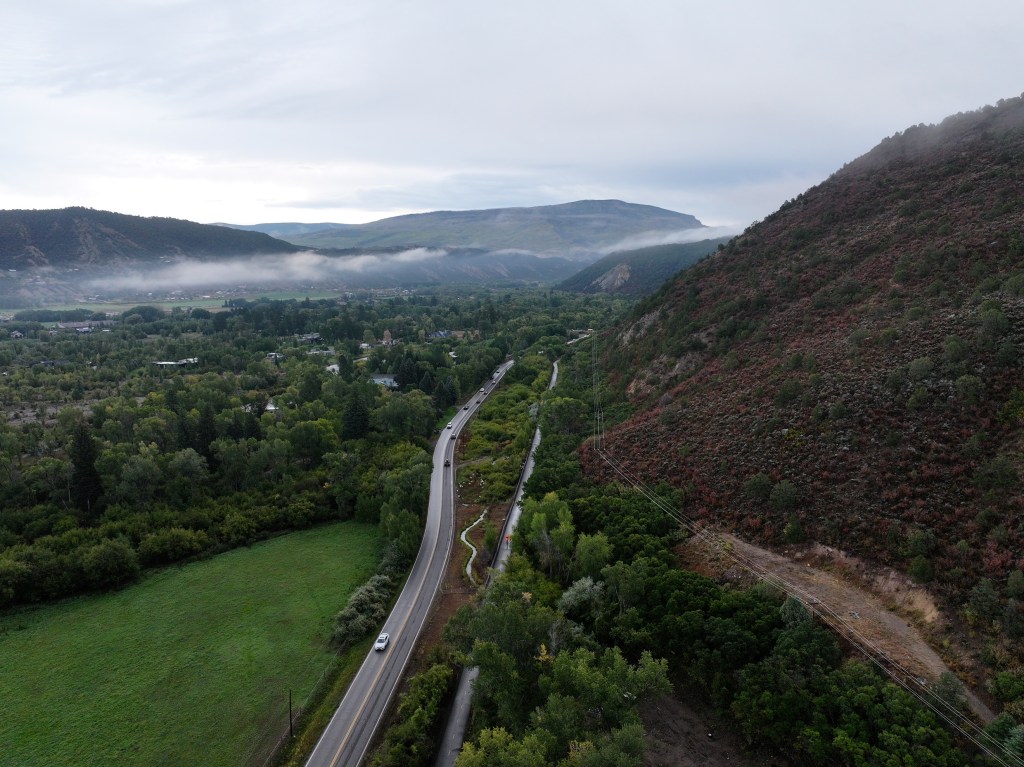
Imagine your next hike or bike ride on the Rio Grande Trail. The sun is out, the air is clear, and the only sounds are the rustle of cottonwood leaves, the chirping of birds, and the gentle flow of the river.
Now imagine the same scene, but with the relentless growl of a diesel-powered mower, the sharp smell of exhaust, and a cloud of dust, pollen, and herbicide hanging in the air.
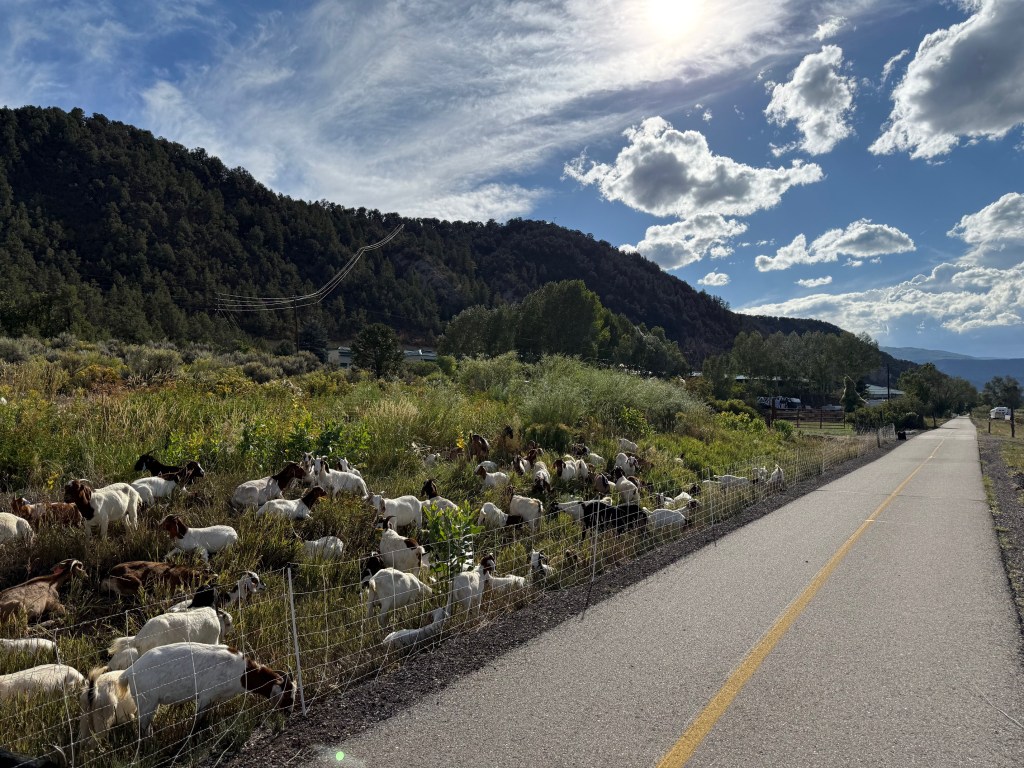
It is not a difficult choice. This desire for peaceful coexistence with nature is at the very heart of why the Roaring Fork Transportation Authority (RFTA) chose a herd of goats as the primary land management team for the Rio Grande Trail corridor. While traditional methods have been the default for decades, RFTA believes a quieter, cleaner, and more holistic approach is not just preferable—it is imperative.
Here we break down why goats are the superior choice for maintaining the Rio Grande Trail’s precious trailside ecosystem.
The Sound of Silence: Noise Pollution Reduction
- The Goat Method: The soundtrack of our project is a peaceful chorus of gentle bleats, the content crunch of chewing, and the quiet hum of nature.
- The Traditional Method: Industrial mowers and weed whackers generate significant noise pollution, often exceeding 85 decibels—a level that can be disruptive to humans and harmful to wildlife.
Why it matters: Noise pollution does more than just annoy trail users. A study published in the journal Nature found that anthropogenic (human-made) noise can reduce avian diversity and alter community composition, as many bird species rely on acoustic cues for communication, predator avoidance, and mating. The constant din of machinery can displace sensitive wildlife, fragmenting their habitat and causing chronic stress. Our goats allow everyone—both human and animal—to enjoy the trail in peace.
Beyond Chemicals: Eliminating Herbicide Runoff
- The Goat Method: Goats are nature’s precision applicators. They consume targeted weeds down to the root, converting them into natural fertilizer. There are no chemicals, no runoff, and no mass loss native plants.
- The Traditional Method: Broad-spectrum herbicides can drift through the air or be washed by rain into the soil and directly into the Roaring Fork River watershed and irrigation canals.
Why it matters: The health of the Roaring Fork is non-negotiable. Chemical runoff can have devastating effects on aquatic ecosystems, harming fish, amphibians, and the intricate food web. The USDA has extensively documented the risks of herbicide runoff into waterways, noting potential impacts on drinking water quality and non-target plant species. By choosing goats, we are choosing to protect our water, our fish, and our community’s health at the source.
Tilling with Hooves: Natural Soil Aeration and Fertilization
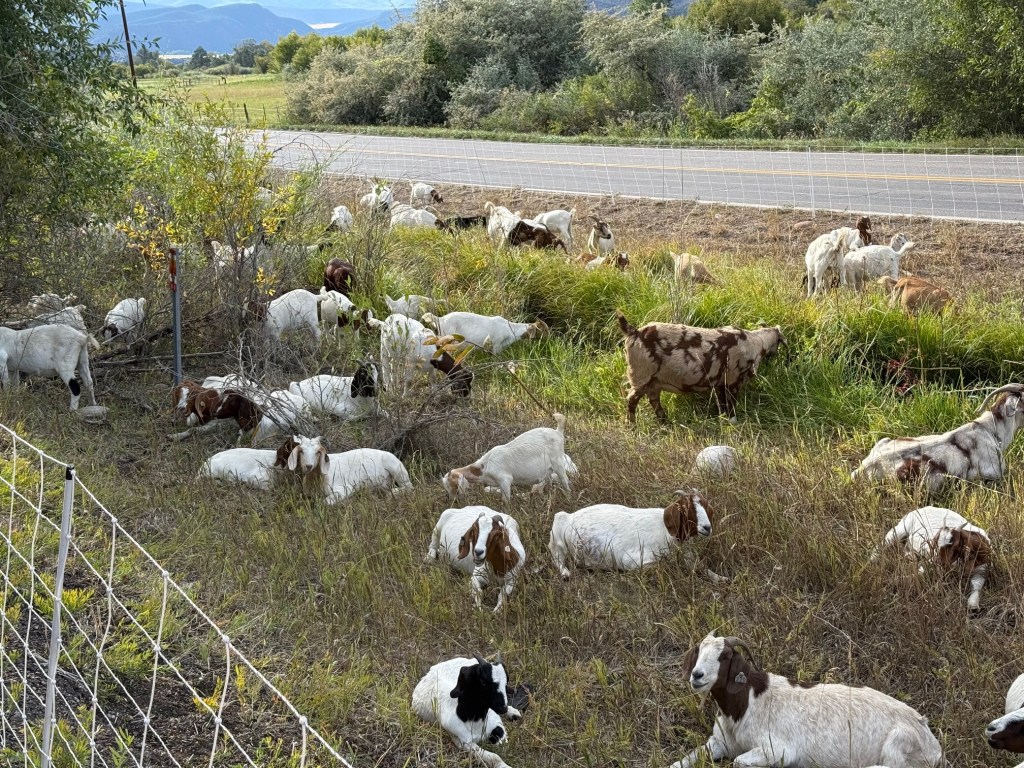
- The Goat Method: As goats move, their sharp hooves naturally aerate the soil, improving water infiltration and reducing compaction. They also fertilize the land as they go, returning nutrients to the earth in a slow-release, organic form that enriches the soil biome.
- The Traditional Method: Heavy mowing equipment compacts the soil, making it harder for water to penetrate and for native plants to establish strong roots. This can lead to increased erosion over time.
Why it matters: Healthy soil is the foundation of a healthy ecosystem. Compacted, lifeless soil leads to runoff and erosion, especially on the sloped terrain near a trail. Goats treat the soil with a gentle touch, actively improving its structure and fertility with every step, preparing the ground for a resurgence of native vegetation.
A Holistic Choice for a Healthier Ecosystem
The choice between goats and traditional methods is about more than just weed control. It is about what kind of experience we want on our trails and what kind of legacy we leave for the land.
| Feature | Goat Grazing | Traditional Mowing/Spraying |
| Noise Level | Minimal (natural sounds) | High (85+ dB) |
| Chemical Use | None | Often required |
| Soil Impact | Aerates and fertilizes | Compacts and disturbs |
| Water Impact | Positive (reduces runoff) | Negative (risk of chemical runoff) |
| Precision | High (targets specific weeds) | Low (can harm native plants) |
| Carbon Footprint | Low (solar-powered!) | High (fossil fuel dependent) |
We chose goats because they are not just a tool; they are partners in restoration. They offer a sophisticated, time-tested, and truly sustainable solution that benefits the land, the water, the wildlife, and every single person who seeks solace and recreation on the Rio Grande Trail.
Next time you are out on the trail and see them hard at work, take a moment to appreciate the golden silence—and the profound impact of a simple, natural choice.
Have a question about our methods? Leave a comment below or reach out to us on social media (@goatforagers)!
 Goats On The Go Boulder
Leave a comment