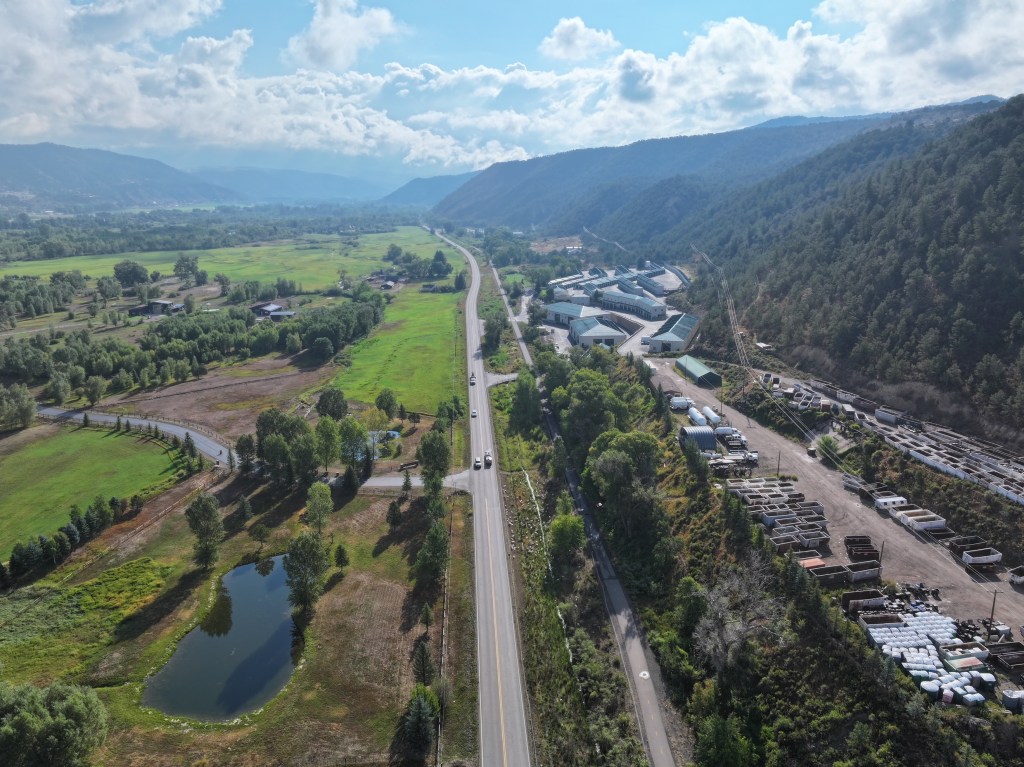
The challenge of land degradation in Colorado—driven by modern development, abandonment, drought, and wildfire—demands innovative and ecologically sound restoration strategies. While the image of goats clearing weeds often garners popular attention for its novelty, their application transcends mere vegetation management. Targeted goat grazing, or prescribed caprine herbivory, has been a sophisticated tool for holistic soil restoration used by the Roaring Fork Transportation Authority (RFTA) for the last decade. This post examines the multifaceted benefits goats provide in rebuilding healthy, resilient soils across the Rio Grande Trail’s diverse ecosystem.
The Landscape of the Rio Grande Trail Corridor
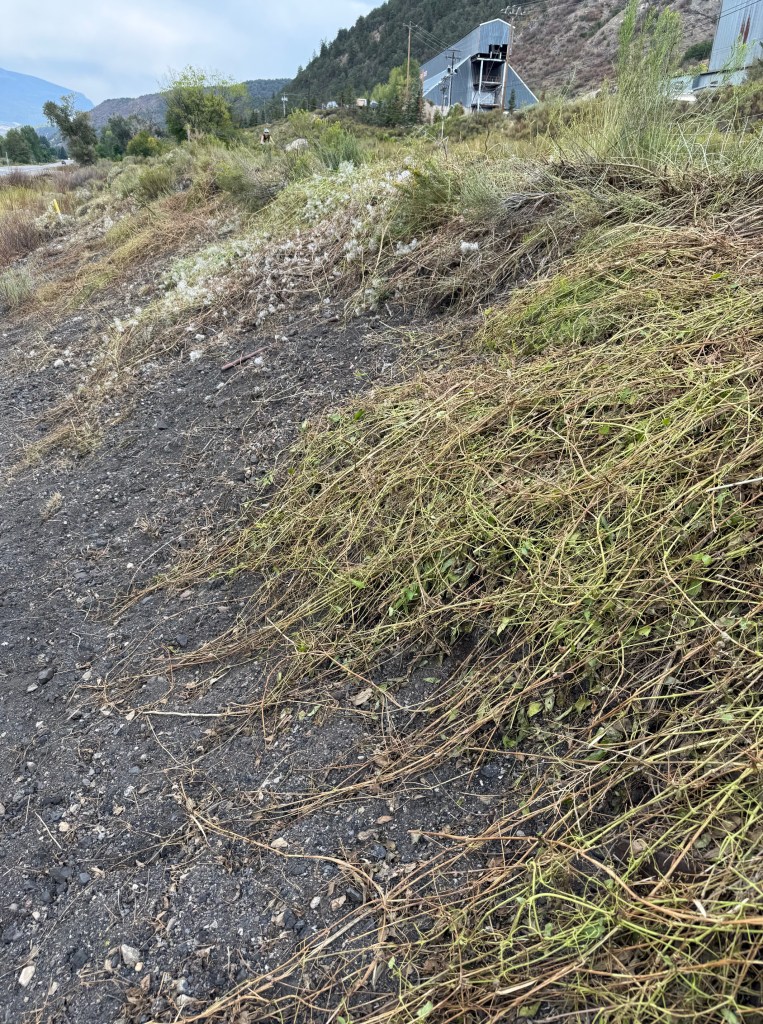
The 42-mile tract of the Rio Grande Trail connects Glenwood Springs with Aspen along the Aspen Branch of the historic Denver and Rio Grande Western Railroad (https://www.rfta.com/trail-information/). The ceasing of rail operations by the mid-1990s and RFTA’s adoption of the corridor in 2001 put into motion the realization of a multi-use trail. The resulting landscape posed a series of ecological challenges with regards to noxious vegetation and erosion through shaved foothill slopes as well as the byproducts of decades of rail activity. Today work continues to restore, foster, and innovate a landscape that serves trail users and native flora and fauna.
The Goat Effect
The unique value of goats lies in their distinct foraging behavior. Unlike cattle, which are primarily grass-eating grazers, goats are foragers. They preferentially consume a wide variety of woody shrubs, forbs, and broad-leaved plants. This behavioral trait is the cornerstone of their restorative potential, influencing soil health through several interconnected pathways:
1. The Organic Matter Cycle and Soil Fertility: The most direct benefit goats provide is the rapid conversion of standing biomass into readily available soil amendments. Goat manure is an excellent source of organic matter and nutrients. It is less likely to harbor weed seeds than the manure of other livestock that graze grasses, and it acts as a slow-release fertilizer, returning nitrogen, phosphorus, and potassium to the soil. This enhances microbial activity and improves nutrient cycling, effectively closing the loop within the ecosystem. Goat urine adds significant amounts of nitrogen in a form that is easily utilized by soil bacteria and plants, further stimulating biological activity and plant growth. This constant deposition of organic waste during a grazing operation creates a “fertilizer-from-within” effect, reducing the need for external inputs and building intrinsic soil fertility.
2. Enhancement of Water Infiltration and Hydrological Function: Colorado’s arid and semi-arid climates make water retention a paramount concern for soil health. Goat grazing improves the hydrological function of the land in two key ways. First, through the reduction of evaporative loss. By consuming water-intensive invasive species like tamarisk (Tamarix spp.) and Russian olive (Elaeagnus angustifolia), goats reduce overall plant transpiration, conserving soil moisture for more desirable native species. Second, by means of the improvement of infiltration. The trampling effect of a managed herd, while needing to be carefully controlled, can break up hard, crusted soil surfaces. This light disturbance incorporates standing plant litter and biomass into the soil surface, creating a more porous structure that enhances water infiltration and reduces destructive runoff and erosion.
3. Biological Tillage/Aeration and Microbial Stimulation: The goat’s hoof action performs a subtle form of “biological tillage” or aeration (a more natural process akin to the green machines pulling those round plugs from your yard in Spring and Fall). Unlike mechanical tilling, which can disrupt soil structure and accelerate organic matter decomposition, the natural trampling by goats aerates the soil surface lightly. This aeration encourages the growth of beneficial aerobic soil microbes and fungi, which are the true engineers of soil health. A robust microbial community is essential for nutrient cycling, aggregate formation, and suppressing soil-borne pathogens.
4. Competitive Advantage for Native Flora and Mycorrhizal Networks: Many invasive plant species degrade soil health by altering soil chemistry or failing to support native soil food webs. Goats can reset this competitive balance. By selectively grazing on invasive thistles, knapweed, and other problem plants, goats reduce the weed seed bank and weaken the dominance of these species. As invasive plants are suppressed, native grasses and forbs, which often have co-evolved relationships with native mycorrhizal fungi, are given a chance to re-establish. These fungal networks are critical for soil structure (through glomalin production), water retention, and nutrient exchange between plants, forming the foundation of a healthy soil ecosystem.
Specific Considerations for the Rio Grande Corridor
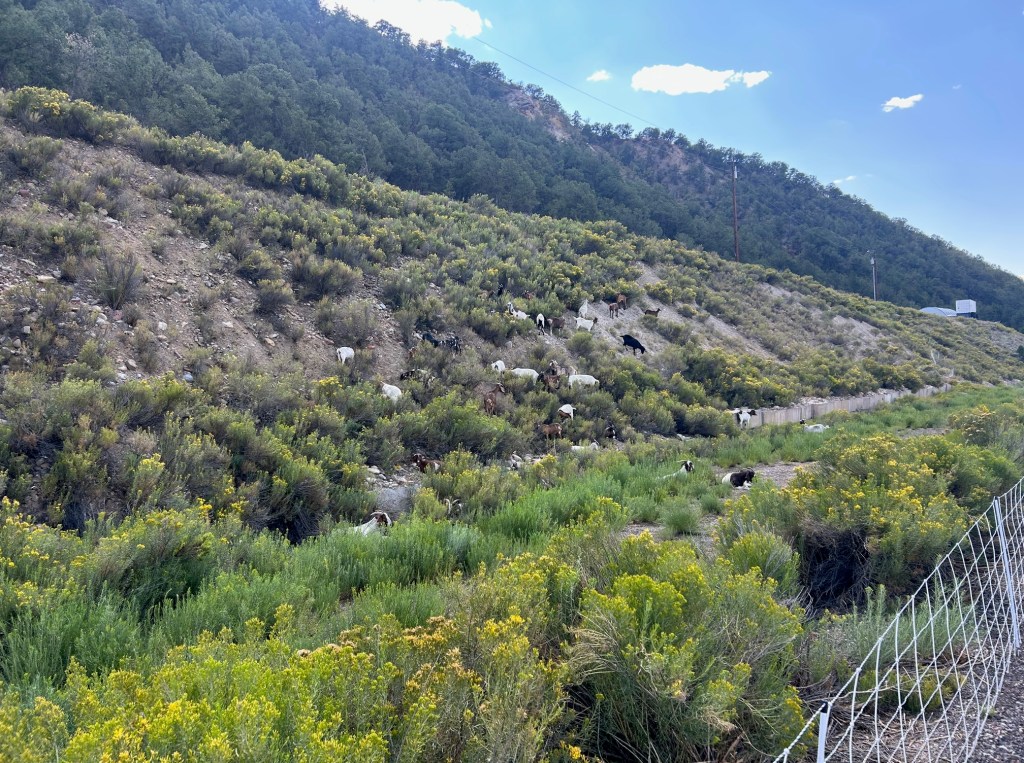
The benefits of goat grazing are not automatic; they are contingent upon the establishment of specific short- and long-term goals that are realized through thoughtful and dynamic herd management. For RFTA’s vision, the control of noxious weeds and soil regeneration are of the upmost priority. RFTA’s use of goat grazing moves far beyond a simplistic “green alternative” to herbicides. It is a form of applied ecology that leverages the natural behavior of an animal to catalyze complex below-ground processes. By converting problem plants into soil-building organic matter, enhancing water cycles, and stimulating microbial life, prescribed caprine herbivory offers a powerful, sustainable, and multifaceted tool for restoring the health and resilience of Colorado’s vital soils. It represents a synergy between agriculture and ecology, demonstrating that sometimes, the most advanced restoration technology is a managed herd of one of humanity’s oldest domesticated companions.
 Goats On The Go Boulder
Leave a comment