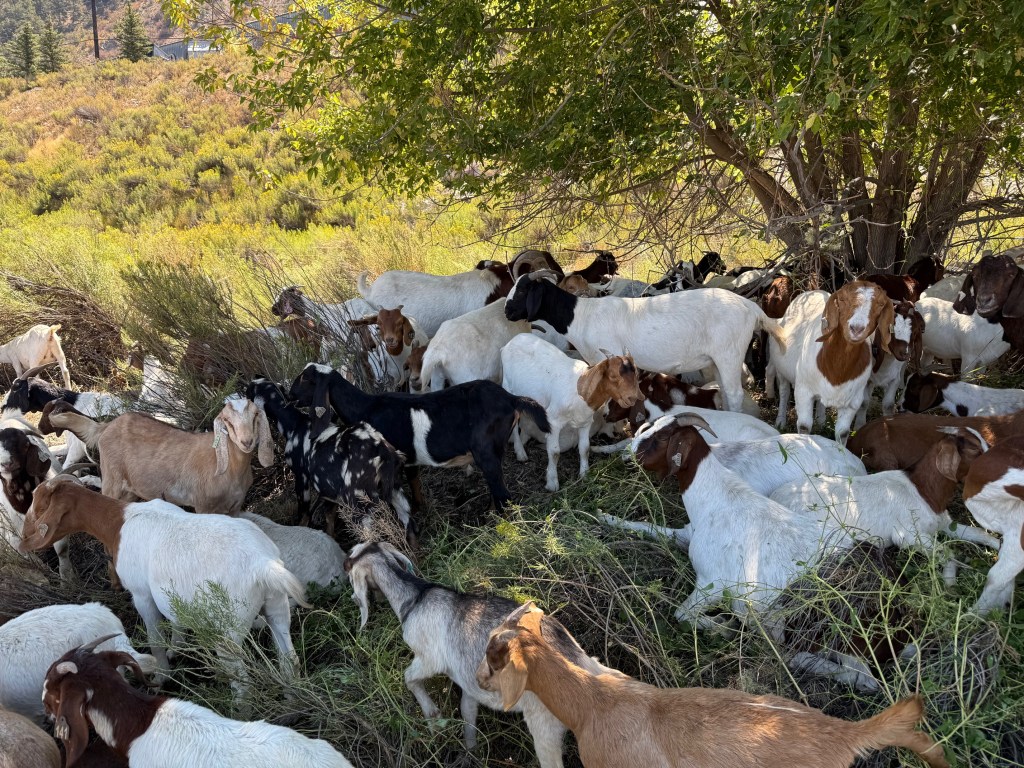
There is something deeply satisfying about watching a herd of goats foraging on noxious weeds and brush. Managing goats near the beautiful but bustling Rio Grande Trail, however, poses a series of challenges. Between the constant foot and bike traffic, regular vehicle traffic along County Road 100, and the ever-present irrigation ditch, a day of foraging requires careful planning to ensure our animals stay healthy and safe. Below are a handful of health-related issues our herders must consider on a daily basis.
The Traffic Triangle: Foot, Bike, and Vehicle Stress
- The Problem: Startle and Stampede Risk: The Rio Grande Trail is a hub of human activity and if not managed correctly, the constant movement can be a significant stressor for goats. Goats are prey animals and can be easily spooked by fast-moving bikes, runners, or loud vehicles. A startled herd can stampede, leading to injuries from fencing, the irrigation ditch, or even risk trail user safety.
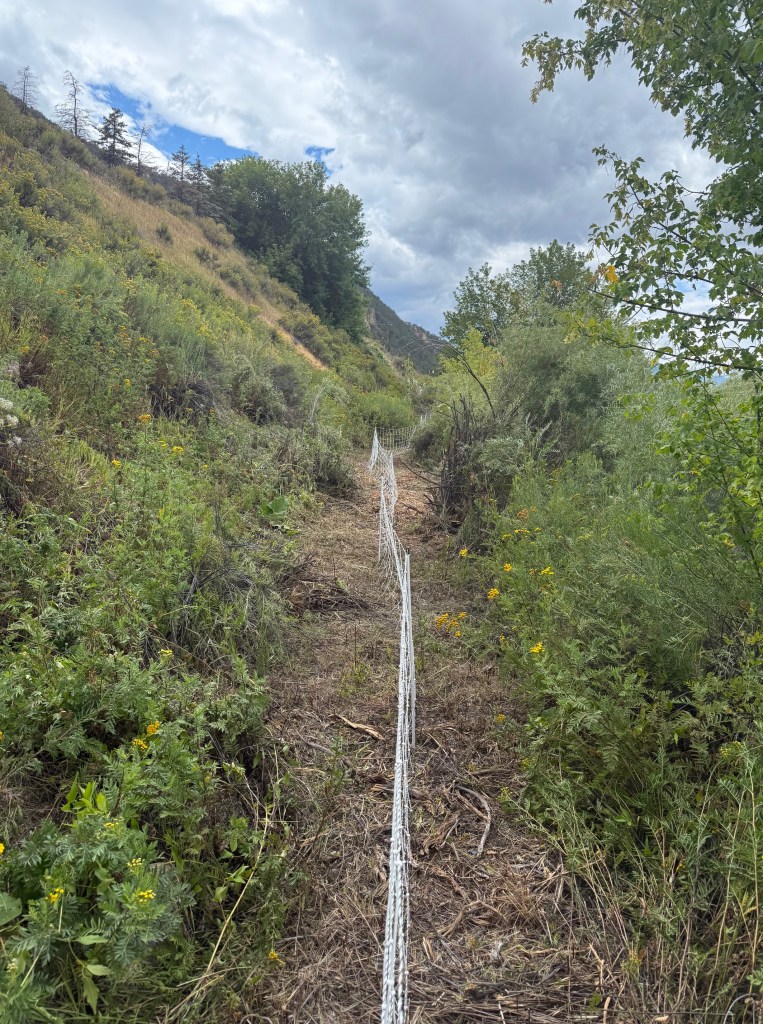
- Our Solution: Constant Presence and Fencing: We have, on average, three dedicated herders onsite 24/7. Their camp follows the herd so they are never far away. This constant presence provides a regular and familiar security blanket for the herd. We also use sturdy electric net fencing with lots of signage. Our signage educates the public and encourages caution, while clear cut fence lines prevent vegetation from lowering the efficacy of the fence and provides a constant and needed reminder to the goats of their grazing area.
The Irrigation Ditch: A Necessary Nuisance
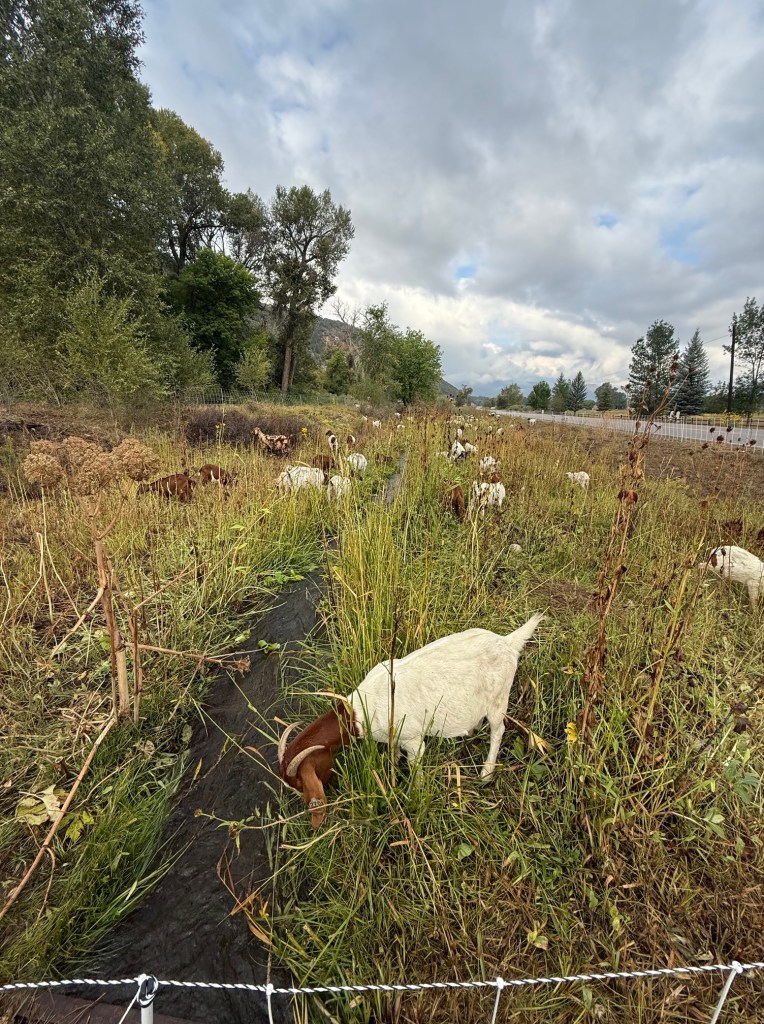
- The Problem: Drowning Risk: Goats are naturally curious but not known as strong swimmers. Steep, slippery, or crumbling banks can lead to a goat falling in and being unable to get out, resulting in drowning.
- Our Solution: Constant Presence and Adaptable Grazing: The majority of the irrigation ditch along the Rio Grande Trail is relatively narrow and slow moving. Certain areas, however, can pose a risk to goat safety. The use of strategic fence lines and constant observation in these areas greatly reduce risk of accidents.
Toxic Plants
- The Problems: Toxic Plants and Debris: In our region, this can include plants like Locoweed, Larkspur, and certain milkweeds. Goats will often avoid these, but when forage is scarce, they might take a risky bite. Unfortunately, certain sections of the trail are littered with trash. Goats will chew on anything. Plastic bags, food wrappers, bottle caps, and even discarded fishing line can cause choking, digestive blockages, or toxicity.
- Our Solutions: Identification and Strategic Grazing: Having grazing throughout Colorado and parts of Wyoming on numerous projects, we have familiarized ourselves with the flora that has proven to be toxic to goats. We have found that when grazing areas with ample desired vegetation, goats will rarely consume toxic varieties. The grazing strategy along the Rio Grande trail is rooted in noxious weed control and soil restoration. These strategies rarely put the goats in an elevated state of hunger, unlike a wildfire mitigation approach. We also walk through all paddocks before we set the goats loose to remove potential debris and vegetation hazards.
Digestive Health
- The Problems: Digestive Issues: Goats, like all mammals, have certain digestive needs that when left unchecked, can cause serious health problems such as Bloat, Acidosis, Enterotoxemia, Toxicity, Parasites, Diarrhea, and Coccidiosis.
- Our Solution: Early Intervention: Our herd managers are trained to identify goats in need of intervention. Behaviors such as isolation from the herd, lethargy, weight loss, enlarged stomachs, loose stool, reduced foraging, lameness, seizures, and trembling or glazed eyes are but a few signs that herd managers use to remove the animal for treatment. We have a variety of injectables, salves, drops, and powders that can treat the most common issues but in more severe cases, an emergency trip to the vet hospital is necessary. We also supplement their diet with protein blocks, mineral licks, and molasses tubs to supply much needed protein, vitamins, and nutrients the goats do not necessarily receive in sufficient quantities from the native vegetation during the early Fall months.
Grazing goats on the Rio Grande Trail is a fantastic way to manage vegetation naturally and connect the community through agriculture. By prioritizing these health and safety considerations, we can ensure our goats thrive, the public stays safe, and the beautiful trail corridor remains healthy for everyone to enjoy.
 Goats On The Go Boulder
Leave a comment