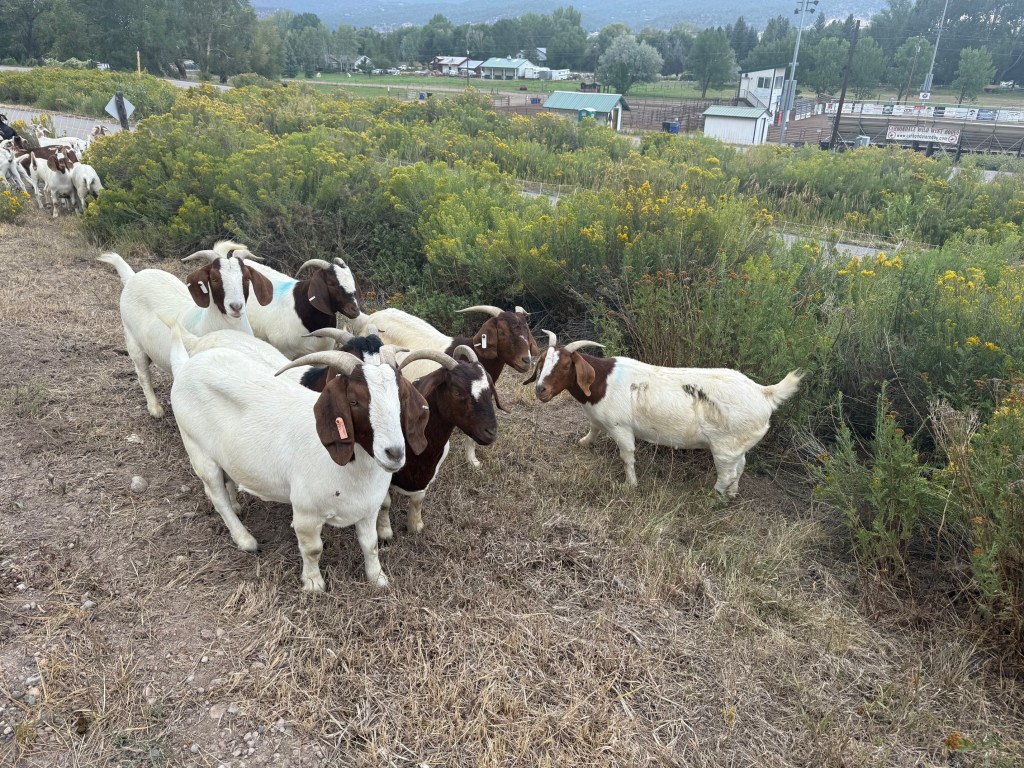
One of the most common questions asked by trail users concerns the aesthetics of the goats. Unlike some goat grazers, we do not prefer a singular goat breed for our grazing strategies. Breed selection for us is both subjective and objective. Subjective in that we are suckers for dapples, the soft temperament of Boers, and the beautiful ears of the Nubians. Objective traits we seek out concern the grazing habits of different breeds, reproductive ability, and certain health considerations. When it comes to adding goats to your homestead or farm for brush clearing and meat or milk production, the choice of breed is crucial. Not all goats are created equal! Each breed brings a unique set of traits, history, and talents to the pasture.
Today, we’re diving deep into three of the our most popular and distinct goat breeds: the mighty Boer, the distinctive LaMancha, and the elegant Nubian.
The Boer Goat: The Meat Market Powerhouse
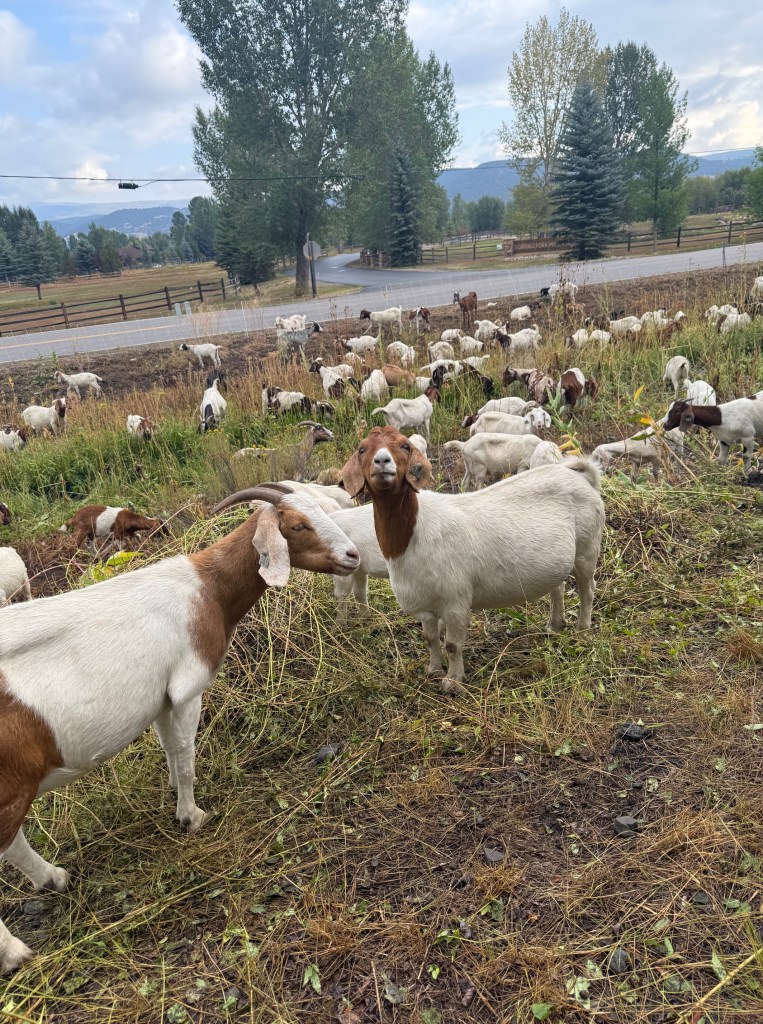
Overall Characteristics:
If you picture a goat built like a professional wrestler, you are thinking of a Boer. This breed is the undisputed king of meat production. They are large, muscular animals traditionally with a striking white body and a solid red or black head. Boers are known for their fast growth rates, high fertility, and docile, easy-going temperament. They are hardy animals with a strong constitution, making them well-suited for a variety of climates.
A Brief History:
The Boer goat (”Boer” meaning “farmer” in Dutch) was developed in South Africa in the early 1900s by breeding indigenous African stock with European and Indian imports (https://breeds.okstate.edu/goats/boer-goats.html). The goal was to create the ideal meat goat: one that could thrive in harsh, local conditions while producing exceptional carcass quality. They were first imported to the United States in 1993 and have since revolutionized the meat and grazing goat industries.
Grazing Benefits:
Boers are browsing champions. Their strong build and relentless appetite make them excellent for clearing tough, heavily vegetated areas. They are efficient foragers and will steadily work through overgrown areas. However, because they are bred specifically for rapid weight gain, they require good quality pasture or supplemental feed to reach their full potential. They are best used for targeted, heavy-duty clearing projects.
The LaMancha Goat: The Distinctive Dairy Queen
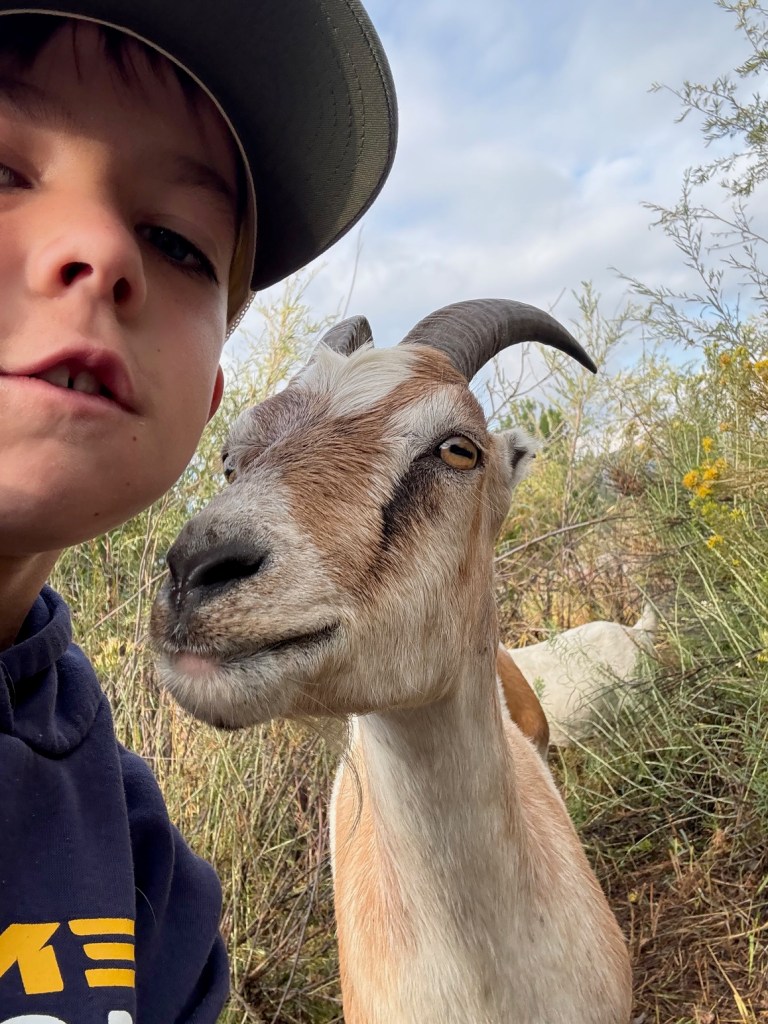
Overall Characteristics:
The most defining feature of the LaMancha is its ears—or apparent lack thereof. They have two distinct types: “gopher” ears (very short, up to 1 inch) and “elf” ears (slightly longer, up to 2 inches, with turned-up ends). Beyond this unique trait, LaManchas are known for their excellent dairy production, yielding milk with high butterfat content perfect for cheese and soap making. They are renowned for their sweet, gentle, and affectionate personalities, often making them favorite family milk goats.
A Brief History:
The American LaMancha breed was developed in the United States in the early 20th century from short-eared goats of unknown ancestry. A woman named Eula Fay Frey was instrumental in refining the breed, which was officially recognized in 1958 (https://breeds.okstate.edu/goats/lamancha-goats.html?Forwarded=afs.okstate.edu/breeds/goats/lamancha/). They are one of the only dairy breeds developed entirely in the U.S.
Grazing Benefits:
LaManchas are vigorous and adaptable grazers. While they are dairy animals, they are also surprisingly hardy and efficient foragers. Their calm nature makes them easy to manage on pasture, and they will consistently work an area, eating a wide variety of woody vegetation, noxious weeds, and leaves. They are a great dual-purpose choice for landowners who want to clear land while also enjoying a steady supply of rich, high-quality milk.
The Nubian Goat: The Vocal All-Rounder
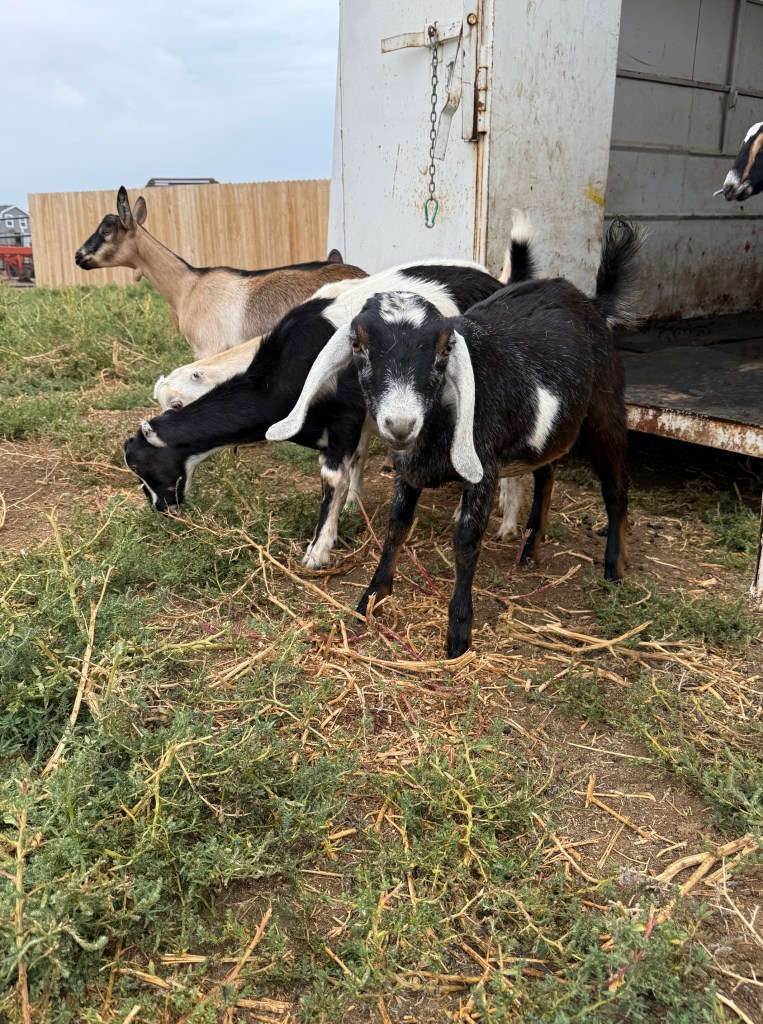
Overall Characteristics:
You cannot miss a Nubian. With their long, pendulous ears, convex “Roman” nose, and loud, assertive voices, they have a regal and dramatic presence. Nubians are a dual-purpose breed, valued for both their high-quality, high-butterfat milk and their meat. They are larger than most dairy breeds and are known for being intelligent, curious, and often strong-willed that live up to the “stubborn as a goat” mantra. They thrive on attention and can be very affectionate with their owners.
A Brief History:
The Anglo-Nubian breed (often just called Nubian in the U.S.) was developed in England in the 19th century by crossing old English milch goats with exotic bucks from Africa and India (https://breeds.okstate.edu/goats/anglo-nubian-goats.html). This cross gave them their distinctive appearance and their ability to thrive in hot climates. They were imported to America in the early 1900s and have been a beloved barnyard staple ever since.
Grazing Benefits:
Nubians are primarily browsers, preferring shrubs, trees, and weeds over grass. This makes them incredibly effective at clearing brushy, overgrown land. Their vocal nature often means they will “talk” to you while they work! Because they are larger and produce more milk, their nutritional needs are higher than some other breeds. They perform best on pasture that is diverse and of good quality, and they may require more supplemental feed than hardier breeds like the Boer, especially during lactation.
Composition of the Goats On The Go Boulder Herd
Our herd is specifically designed to provide a thoughtful yet efficient grazing approach that includes the following benefits:
- For Heavy-Duty Brush Clearing: The Boer goat is your best bet. Their strength and browsing instinct are unmatched for tackling tough jobs.
- For a Gentle, Dual-Purpose Grazer: The LaMancha is a wonderful choice. You get efficient clearing paired with fantastic milk production in a calm, friendly package.
- For a Charismatic Browser: The Nubian excels at clearing brush and leaves while also providing rich milk. Just be prepared for their big personalities and even bigger voices!
 Goats On The Go Boulder
Leave a comment